




Narine Ghazaryan (name changed at her request) is now a housewife. Before the birth of her first child, she has worked as a nurse at a private dental clinic in Yerevan for several years. Considered a valued member of the team, Narine continued working throughout her pregnancy.
“The head of the clinic kept assuring me there would be no problem: the baby would be born, I would go on maternity leave, and then return to work. But once I was already on prenatal leave, the accountant called and conveyed management’s ‘offer’: either I submit a resignation letter or pay a monthly fee so the clinic would transfer maternity contributions to the state on my behalf. I had no other option, so I resigned,” Narine recalls.
In fact, there was another option. However, 27-year-old Narine did not seek legal advice, believing it would take time away from caring for her newborn. Had she done so, she would have learned that her employer’s demand violated labor legislation and could have resulted in state-imposed fines. This sense of isolation reinforced Narine’s belief that, for many employers, even years of professional experience become irrelevant once a woman has a child to care for.
Stories like Narine’s are not uncommon in Armenia. In professional settings, the rights legally afforded to women often fail to be implemented. In today’s labor market, having a family is often treated as a liability rather than a natural part of life.
Against this backdrop, the idea of a ‘family-friendly employer’ is gaining traction. It describes a workplace where employees can manage both work and caregiving duties without stress, guilt, or fear of job loss. This approach is not limited to working mothers with young children. A family-friendly workplace also considers employees caring for other family members, including those who are sick, elderly, or have disabilities.
Being a family-friendly employer involves a combination of several components:
- Flexible working arrangements, such as reduced working hours, remote work, and results-based pay;
- Paid leave, including maternity, paternity, and childcare leave;
- Support for childcare, such as partial compensation for kindergarten or nanny fees, and the provision of breastfeeding facilities;
- Well-being policies, including health insurance and sports or wellness programs;
- Career development, through training and mentorship.
While a perfect balance between work and family life may be impossible, workplaces can create conditions that prevent imbalance from becoming a source of personal stress or disappointment.
Why Women’s Employment Remains Low in Armenia
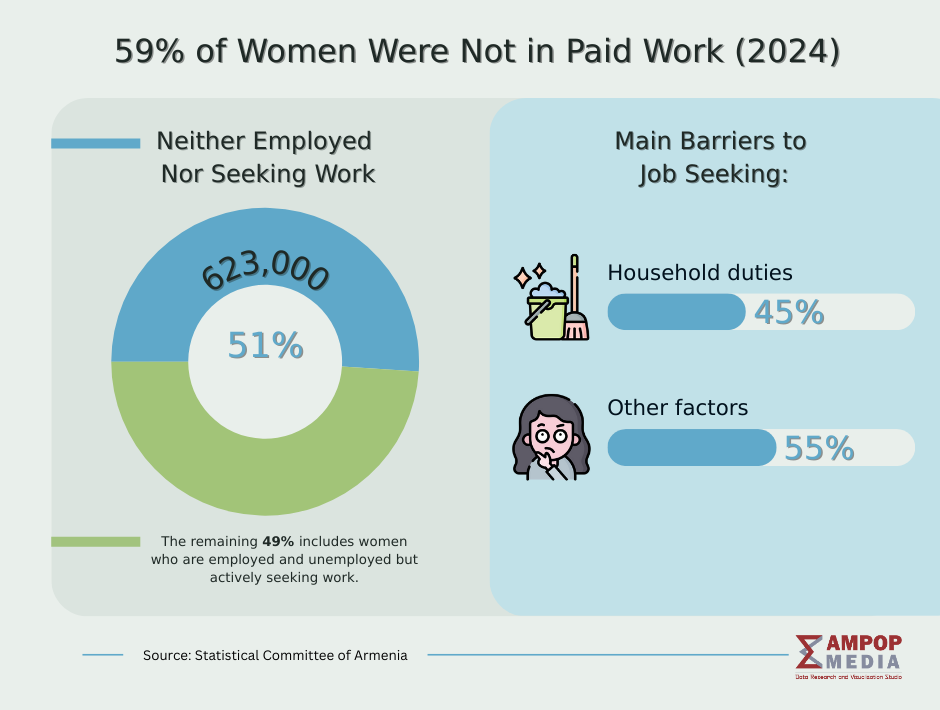
In 2024, 59% of Armenian women were not in paid work, according to the Statistical Committee. Among women aged 15–74, 51%—about 623,000—were either unemployed or not seeking work, most of them (45%) primarily engaged in household duties.
Access to early childhood education and care remains a major challenge in Armenia. According to the Ministry of Education, Science, Culture and Sports, only 5.3% of children aged 0–3 are enrolled in preschool programs, while enrollment rises to 71% for children aged 3–5.
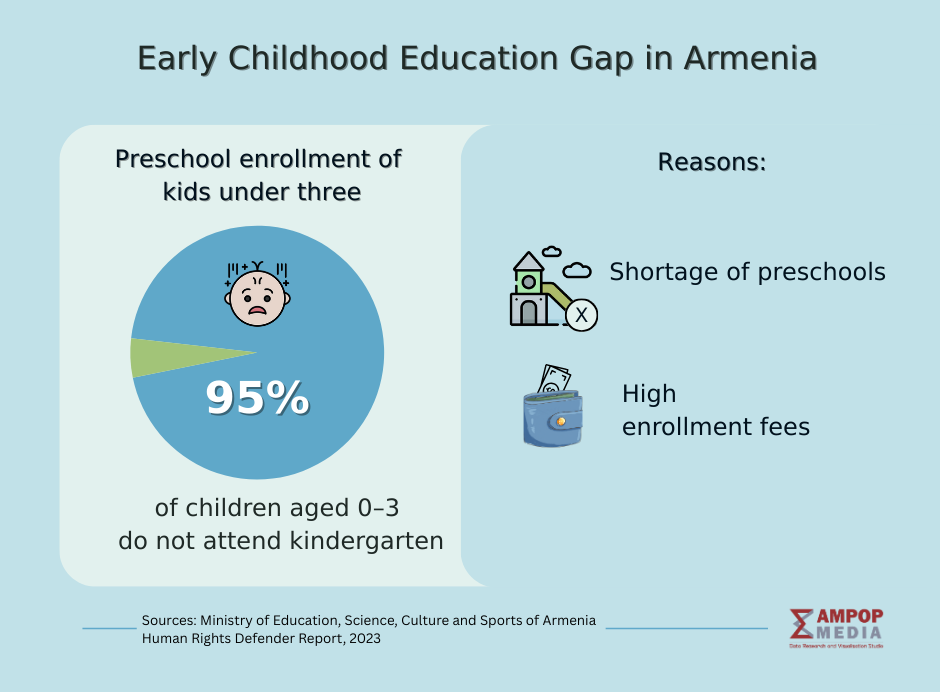
Nearly 95% of children under three in Armenia do not attend kindergarten or other preschool programs. The 2023 annual report of Armenia’s Human Rights Defender highlights cases where the shortage of preschool facilities forced parents to provide childcare and early education themselves. In other instances, parents remained employed but had to spend most—or even all—of their salary on preschool fees.
In this context, being a family-friendly employer is no longer just a matter of goodwill—it has become a practical necessity.
Advocating the concept of a “family-friendly workplace” in Armenia
In Armenia, advocacy of the family-friendly employer concept is led by the “Point 33” NGO, which, in cooperation with the German Friedrich Ebert Foundation, has launched the “For a Family-Friendly Workplace” initiative and created the Family-Friendly Employer online platform.
Through this platform, the organization collects and disseminates materials on family-friendly workplace policies, provides a practical guide on how to become a family-friendly employer, and accepts applications from organizations seeking to receive the “Family-Friendly Employer” badge.
According to Liana Badalyan, Head of Programs at the Friedrich Ebert Foundation in Armenia, the initiative aims to do more than raise awareness.
“Together with “Point 33”, we have sought to bring into public discourse issues that often remain marginalized or considered taboo—including the concept of a family-friendly workplace,” she emphasizes. “For us, it was important not only to discuss the problem but also to provide practical tools and, through collaboration with stakeholders, support the process with various programs, helping to drive cultural change.”
Astghik Karapetyan, President of “Point 33”, drawing on studies of family-friendly policies and workplace models in the Czech Republic, Hungary, and elsewhere, notes that in many cases the state works closely with civil society to implement such policies, while also providing incentives and subsidies for organizations that adopt family-friendly practices.
According to Karapetyan, the concept of the family-friendly employer is gradually beginning to gain recognition at the state level in Armenia as well.
“We are already in dialogue with the government. Just today, we received an invitation to discuss possible next steps in more detail, taking into account our research on international best practices,” Karapetyan told Ampop Media.
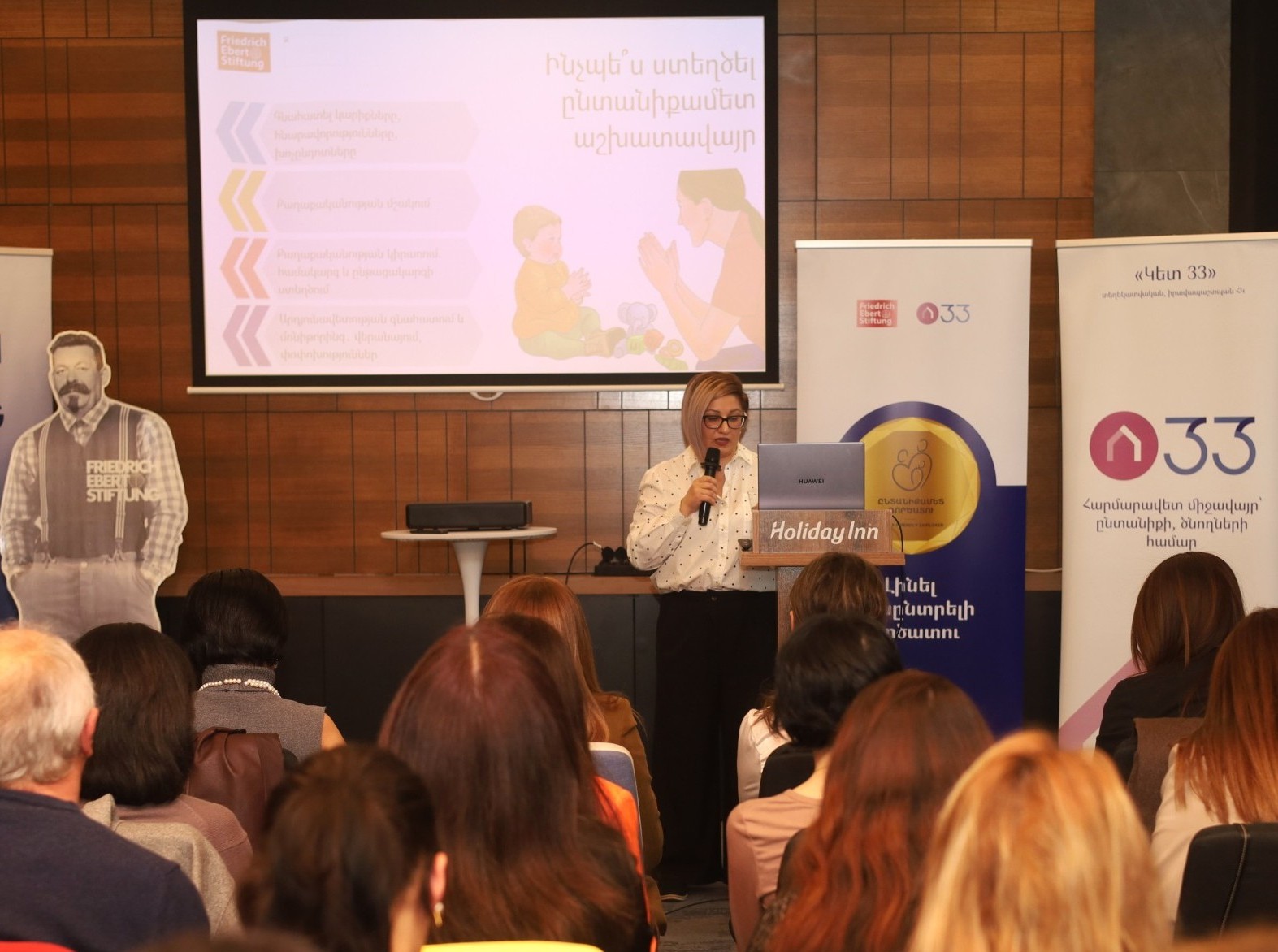
In December 2025, the closing event of the “For a Family-Friendly Workplace” program was held in Yerevan. Among the participants was Lusine Kocharyan, Deputy Minister of Labour and Social Affairs of Armenia.
In her welcoming remarks, emphasizing the importance of promoting the concept of a family-friendly workplace, Deputy Minister Kocharyan noted that its wider adoption would lead to systemic change.
“Our primary legislative goal is to protect employees’ rights. But today, the reputation of the employer is just as important. If we approach these issues from both sides—taking into account employees’ rights as well as employers’ responsibility and reputation—we can achieve a double impact,” the official said.
What a family-friendly approach offers the state, employers, and employees
For the state, family-friendly workplaces contribute to expanding the labor force, increasing women’s participation in the labor market, strengthening gender equality norms, and even having a positive impact on birth rates.
For employees, such an approach means reduced stress, the elimination of the “work or family” dilemma, and a more stable family environment.
International experience shows that this approach is also beneficial for businesses. In the United Kingdom, 82% of employers agree that flexible working arrangements are critical for retaining talented staff. In the United States, employee retention rates reach 83–94% among employers that actively support breastfeeding in the workplace.
Why this shift in mindset matters
The concept of the “family-friendly employer” is still relatively new in Armenia, but it is already clear that it has moved beyond the realm of purely theoretical debate. At its core, it raises questions about the values guiding employers’ hiring and management practices: fixed working hours or results-based performance? control or trust? employee “sacrifice” or long-term sustainability?
When such choices are not available, the outcome is often similar to what happened in Narine’s case.
The “Point 33” initiative seeks to make this choice possible – not through coercion, but through examples, practical tools, and public discussion.
The initiative has also been joined by the Armenian office of the United Nations Population Fund (UNFPA), the Confederation of Trade Unions of Armenia, the Child Protection Network, and other organizations.
During the December closing event, the first Family-Friendly Employer badge and certificates were awarded. According to Astghik Karapetyan, President of “Point 33”, employers who received the badge will remain under the organization’s close attention throughout the year—in a positive and supportive sense.
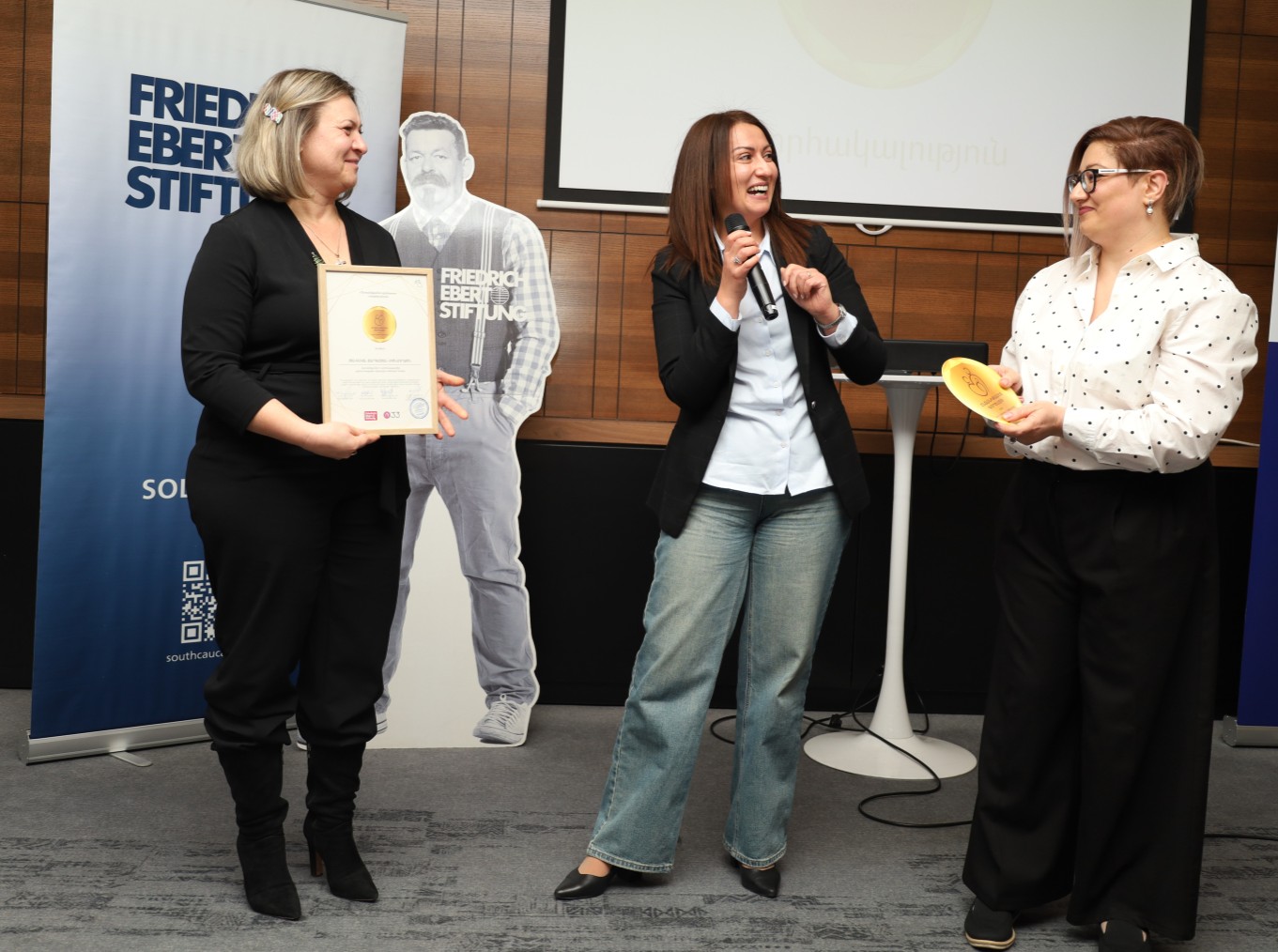
“We are not judges. We view employers as partners, whom we will support for a full year at the informational and advisory level. The badge is awarded for one year as a form of public recognition—for which we, too, bear a certain responsibility,” Karapetyan told Ampop Media.
By Karine Darbinyan
Photos: courtesy of the “Point 33” NGO
Main image: generated using AI
Note: All materials published on Ampop.am and visuals carrying the Ampop Media branding may not be reproduced on other audiovisual platforms without prior agreement with Ampop Media and/or the executive team of Journalists for the Future.
Փորձագետի կարծիք
First Published: 13/01/2026