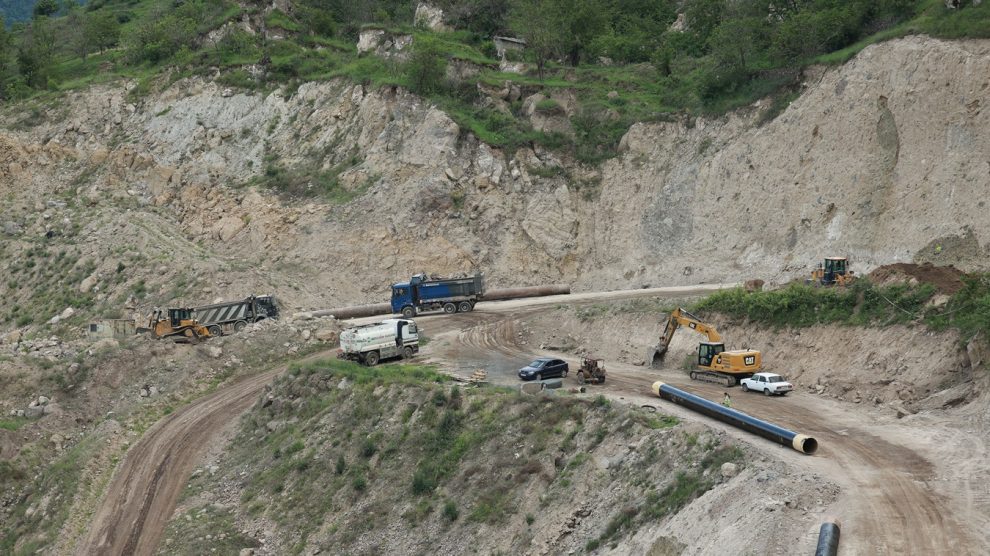


The volume of waste in Armenia’s landfills is increasing rapidly, forcing local authorities to grapple with the complex challenge of allocating new landfill sites.
Over the past two decades, the primary driver behind this growth has been the surge in packaging and single-use product...
Layout A (with pagination)
The “open skies” policy pursued by the government in the field of civil aviation in Armenia continues to be criticized within the professional community.
In order to fully reveal the problem, lawyer Hamlet Avetisyan studied the policy pursued in the field since the...
The earthquakes recorded in Armenia in March reignited discussions on the topic. In the morning of March 8, an earthquake occurred 6 km from the town of Spitak, with a magnitude of 6-7 at the epicenter. The tremors were felt in the Lori, Shirak, and Tavush regions with an intensity of...
As of the 2023-2024 academic year, Armenia has 29,000 teachers. Of these, approximately 26,000—89.5%—are women. This numerical evidence of women’s dominance in schools is derived from data provided by Armenia’s Statistical Committee.
However, the numbers don’t explain why or how...
Fostering care within schools, neighborhoods, and social circles while learning to empathize with others is a cornerstone for societal growth.
Embedding these values—particularly among younger generations —relies heavily on efforts to combat bullying.
The concept of bullying is not...