


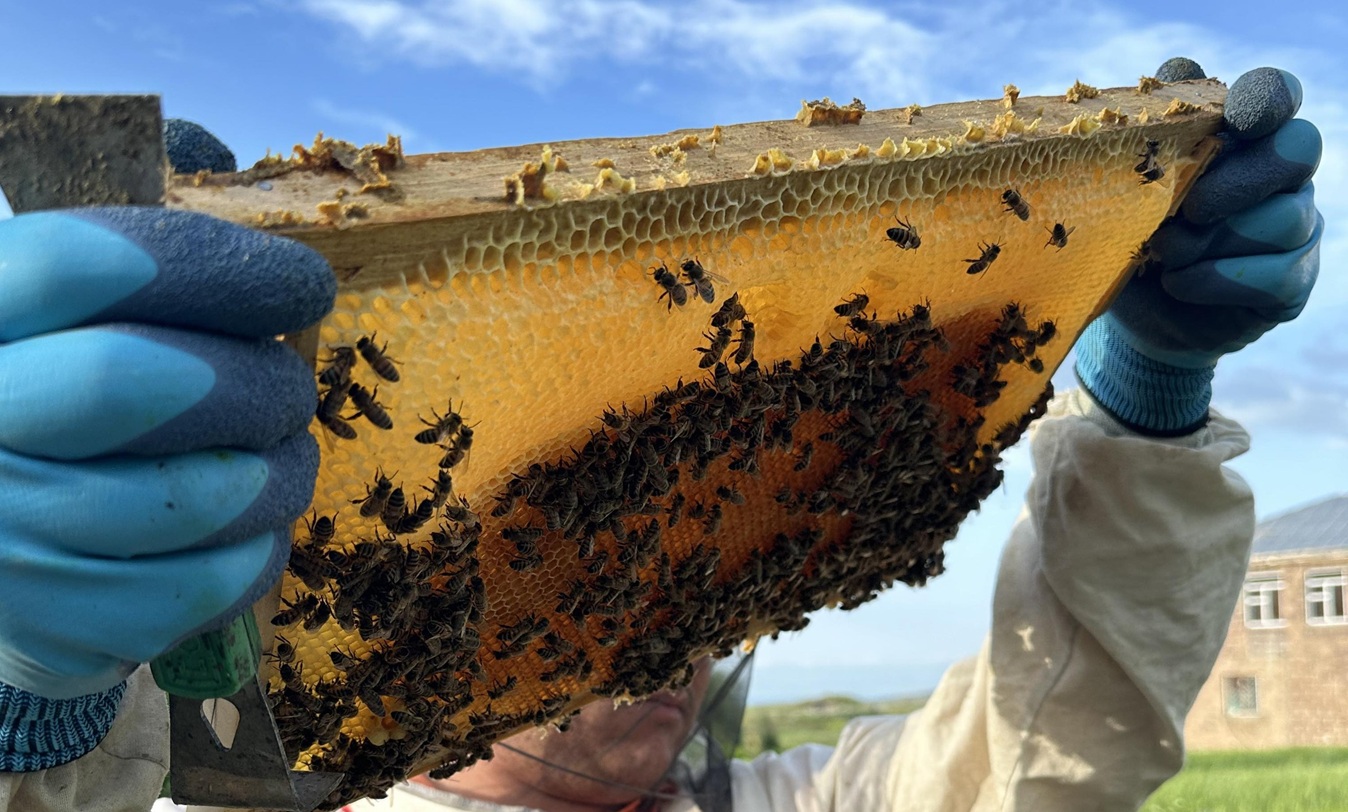
Armenia’s beekeeping sector stands at a critical crossroads. Despite the country’s rich biodiversity, favorable climate, and centuries-old beekeeping traditions, the industry remains highly fragmented: nearly 11,000 Armenian beekeepers operate small apiaries averaging just 17 hives each. This structural limitation prevents economies, slows technological adoption, restricts market access, and hinders the development of a competitive export sector. Yet the potential—economic, ecological, and social—is remarkably high.
In August 2024, the Armenian government launched a two-year “Pilot Program for Beekeeping Development,” the first state-level initiative in decades aimed at revitalizing the sector. The program subsidizes 50% of the cost of newly purchased bee colonies and aims to create 10,000 new colonies nationwide that can benefit particularly rural and border communities where agricultural opportunities have sharply declined since 2020 due to security concerns. However, during the first year, only about 2,580 colonies were acquired—far below the initial target. Bureaucratic hurdles, seasonal constraints, financial barriers such as required bank guarantees, and beekeepers’ general caution toward new initiatives of the government have limited participation.
Despite these challenges, the program signals a long-awaited policy shift. Experts underscore that meaningful impact will appear only in the long term, as beekeeping is an inherently gradual, knowledge-intensive field. The lack of formal apicultural education in Armenia remains a critical bottleneck. Most beekeepers rely on informal, intergenerational knowledge, resulting in inconsistent hive management, weak disease control, and limited capacity for product standardization. Civil-society actors such as the “Beekeeping Forge” Educational Center have begun filling these gaps through non-formal training, youth programs, and efforts to build export culture—skills crucial for entering global markets where product quality, storytelling, packaging, and branding are decisive.
The global honey market continues to expand, reaching USD 9.2 billion in 2024 and projected to grow by 4.7% annually. Armenia’s honey exports, though small in scale, have increased more than eighteenfold over the past decade.
Armenian honey—valued for its purity and floral diversity—has strong potential in high-end international markets, especially as worldwide concerns over pollinator decline intensify. Ecologically, beekeeping carries strategic significance: bees increase crop yields by 30–40%, and Armenia currently lacks nearly 70,000 colonies to ensure full pollination of its wild and cultivated flora.
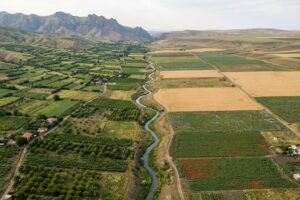
The country’s border communities offer an additional strategic advantage. Thousands of hectares of unused alpine and subalpine meadows—no longer accessible for livestock grazing due to security risks—constitute ideal foraging territories for bees. These natural landscapes could support tens of thousands of hives, turning dormant land into economically productive ecosystems without ecological damage.
However, structural issues remain substantial: overly small apiaries, limited consolidation, fragmented nectar-source areas, insufficient marketing and export capacities, and the near absence of modern equipment. Without addressing these systemic barriers through education, cooperative models, improved extension services, and targeted export support, Armenia cannot fully leverage its competitive strengths.
A more measured view suggests that the sector’s progress will depend less on pilot incentives alone and more on consistent, long-term policy attention. Beekeeping is increasingly recognized by both government and civil-society actors as an area where relatively small interventions—training, access to equipment, market information, and support for participation in trade fairs—can yield meaningful improvements.
Strengthening extension services, encouraging cooperative models, and addressing structural barriers such as small-scale production and uneven market access remain essential steps. If these efforts continue and become more coordinated, Armenia’s beekeeping sector is likely to move toward steadier growth, gradually improving its productivity, market integration, and contribution to rural livelihoods.
This article was originally created in Armenian by Gevorg Avchyan
Visualization by Karine Darbinyan
The English summary was created by AI based on the original article in Armenian.
The material was produced by Ampop Media in cooperation with the Friedrich Ebert Stiftung (FES). The views and opinions expressed in this publication are those of the author(s) and do not necessarily reflect those of the Friedrich Ebert Stiftung.
Note: All materials published on Ampop.am and visuals carrying the Ampop Media branding may not be reproduced on other audiovisual platforms without prior agreement with Ampop Media and/or the executive team of Journalists for the Future.
Փորձագետի կարծիք
First Published: 04/12/2025