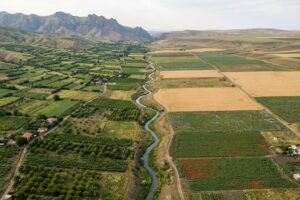



Volodya Martirosyan, a resident of Archis village in Armenia’s Tavush region, will never forget the losses he suffered during the devastating floods of May 2024. The surging Debed River swept away half of his riverside orchard.
For Volodya, the orchard was far more than a small piece of land — it was his family’s main source of income. For years he had invested in irrigation systems and soil-improving infrastructure, enabling the plot to yield abundant harvests every summer. However, just two days of torrential rain and flooding wiped out not only most of his fruit trees, but also the infrastructure that supported them — leaving him without the income he had counted on from that year’s harvest.
Volodya says the state provided him with only 250,000 AMD (about US $625) in assistance. The amount was barely enough to buy new saplings, let alone cover the cost of clearing the mud, repairing the irrigation system, or bringing the orchard back to life.
And Volodya is far from alone.
The May floods delivered a devastating blow to 38 communities in the Lori and Tavush regions — what many now see as Armenia’s first major climate warning.
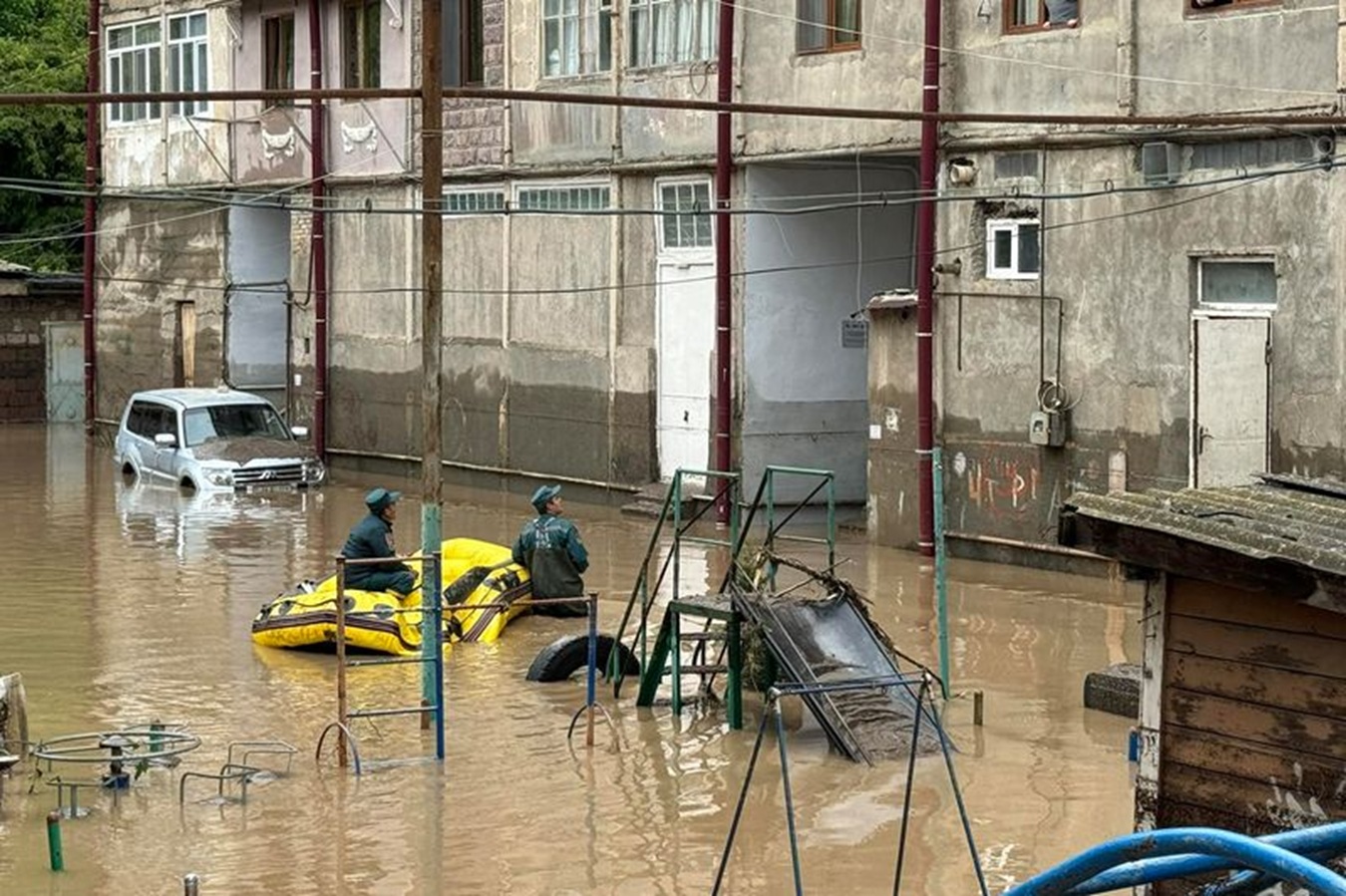
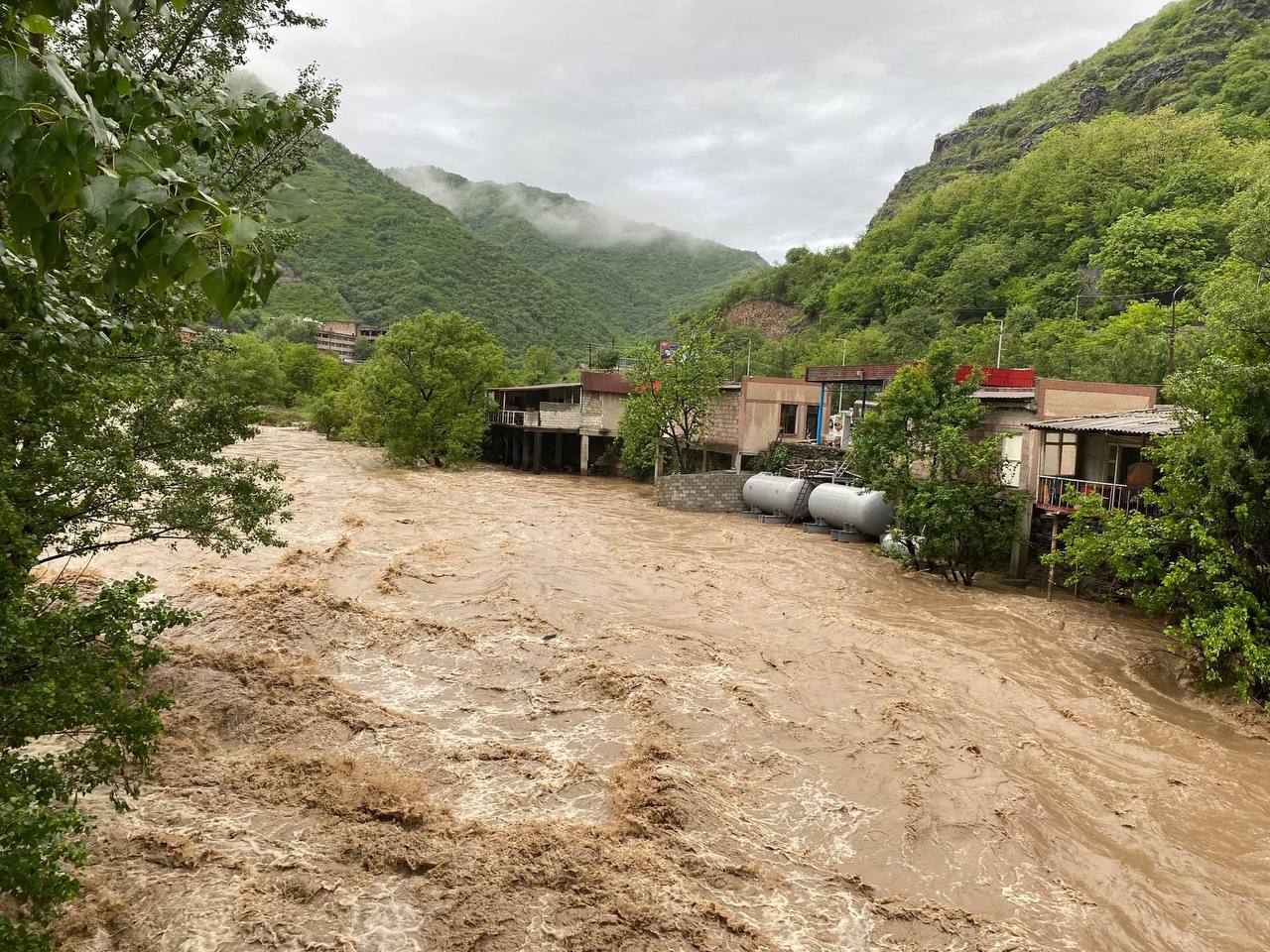
Within hours, the overflowing Debed, Aghstev, and Tashir rivers inundated dozens of settlements, destroying infrastructure, riverside orchards, bridges, and roads, and severing links between communities. At least four people were killed and hundreds were left homeless. The Armenian government declared the affected areas disaster zones.
Torrential rains and flash floods also caused severe damage to agricultural lands far from the riverbanks, stripping away the fertile topsoil — a layer that is extremely difficult and time-consuming to restore.
The chart below illustrates Armenia’s precipitation levels over the past ten years and their deviations from long-term norms. That same spring, heavy rainfall repeatedly flooded parts of Yerevan, where some districts began to resemble a lake or seashore. In the regions, the flooding was primarily caused by unprecedented river overflow, whereas in the capital it was the result of clogged storm drains and decades-old, deteriorated infrastructure.
This chart shows the amount of precipitation in Armenia over a ten-year period. On average, precipitation has decreased by 7 percent compared to the norm. The norm is calculated based on the 1961–1990 average values, which the World Meteorological Organization (WMO) has defined as the international standard.
Over the past decade (2015–2024), summer and winter precipitation in Armenia has significantly decreased—by 9.4% and 11.5%, respectively—indicating a worrying decline in water resources. At the same time, although the overall amount of spring precipitation has changed little, its nature has become extremely irregular, with sharp deviations from the norm. This was especially evident during the spring of 2024, when catastrophic floods occurred across the country. Overall, 2024 became a record-breaking year with 101 extreme weather events registered.
These events reflect deeper, systemic challenges driven by climate change.
Is Armenia prepared to confront new disasters with Soviet-era infrastructure as extreme weather events continue to rise?
Growing Risks, Limited Capacities
Ampop Media examined recent climate deviations recorded across Armenia, the factors driving them, and the level of preparedness among state and local institutions should similar events occur again.
Although Armenia is among the world’s lowest greenhouse gas emitters (0.02%), it remains highly vulnerable to the impacts of climate change.
Before 2015, the country’s average temperature had already risen by 1.23°C compared to the pre-industrial period (1929). Since then, it has climbed even higher — reaching 1.6–1.7°C above the norm. As a result, the frequency and intensity of climate-related hazards such as floods, mudflows, hailstorms, droughts, wildfires, and frost have increased markedly, with serious consequences for ecosystems, the economy, and society.
According to a rapid post-disaster needs assessment supported by the UN Office, the May floods in Lori and Tavush alone caused more than USD 82 million in economic losses, while recovery needs exceeded USD 117 million.
The flooding of the Debed River damaged major transport routes — nearly 30 kilometers of roadway — along with several bridges, leaving seven settlements completely cut off.
Communication lines were disrupted, and the delivery of food and medical assistance was significantly delayed.
The flood exposed significant gaps in Armenia’s disaster preparedness and response systems, particularly in institutional coordination, timely assistance, and resilience to secondary risks.
This was also observed by Oleg Dulgaryan, head of the “Community Consolidation and Support Center” NGO in Alaverdi. His organization was among the first to mobilize volunteers. “When the disaster struck, our volunteers — along with many local residents — immediately rushed to the affected communities to provide first aid,” Dulgaryan told Ampop Media.
“The initial response was very quick. The same was true for state and local authorities. From senior officials to field specialists, everyone was on the ground trying to help and organize the process,” he recalled.
However, he said that one critical issue quickly became apparent: the lack of institutional preparedness.
“There was cooperation, but it was clear that the teams arriving at the scene were not operating in a coordinated way. The community leader, like everyone else, was standing in the mud in boots, trying to clean up. But there were no planned, structured actions. It was all very chaotic,” Dulgaryan said.
He believes the consequences of such natural disasters would be far less severe if proper civil protection plans were developed and regularly tested in advance.
“Before the May disaster, various organizations had monitored Alaverdi’s climate conditions, assessed the risks — including flood hazards — and issued recommendations,” he said.
According to him, communities are required to have civil protection plans and to conduct annual drills involving the population based on those plans.
“There should be clear instructions on how municipalities should respond and how the pre-established groups should operate. But for the system to work, at least one drill must be carried out each year. Since 2016, I haven’t heard of any such drills,” Dulgaryan added.
Another issue frequently raised by affected residents was the incomplete damage assessment process and the resulting unequal compensation. Many said the payments they received did not reflect their actual losses. For instance, irrigation systems, agricultural machinery, and other assets were not included in the initial assessments, and fixed payments for movable property did not come close to covering their real value.
Compensation amounts were revised only in cases where families publicly voiced their dissatisfaction or appeared in media reports.
A year and a half after the floods, it is also important to note that essential infrastructure has either been restored or is now in the final stages of reconstruction.
In Lori, the Debed riverbed has been cleared, the Dzoraget River widened, blocked tunnels reopened, and damaged bridges rebuilt. Access to isolated settlements was restored shortly after the disaster through newly constructed bridges.
Despite this progress, road reinforcement and full-scale construction in several sections remain unfinished, indicating that the infrastructure’s resilience has not yet been fully secured.
Gaps in Climate Policy
In Armenia, climate risks are worsening not only because of global climate change but also due to inadequate governance. The unregulated use of natural resources, the reduction of forest and agricultural lands, growing volumes of waste, and inefficient energy management all significantly undermine the country’s resilience.
“In recent years, the intensity of climate-related hazardous phenomena has increased significantly,” says Victoria Burnazyan, Vice-president of “EcoLur” Informational NGO.
“While one region is overwhelmed by floods, another is battling forest fires, as we saw this autumn, and in yet another, desertification is gaining ground. The climate is changing before our eyes, whether we are ready or not.”
She argues that Armenia needs a comprehensive and coordinated adaptation framework, which is largely absent today.
For years, the expert community has urged the government to develop dedicated adaptation plans for key sectors, agriculture, forestry, energy, healthcare, and territorial management, to enable realistic risk assessments and targeted policy solutions.
According to the July 2025 “Strengthening the Civil Society monitoring of CEPA implementation” report almost all sectoral policies, spanning forestry, agriculture, energy, and waste management, are still incomplete and insufficiently aligned.
Reforestation programs have not been implemented. The plan to increase forest cover by 50,000 hectares by 2030 has progressed by only 1.64% over the past three years, just 820 hectares planted, while since 1993 Armenia has already lost 126,200 hectares of forested land.
This chart does not include data on forest pests and diseases, nor on the scale of illegal logging, all of which continue to threaten Armenia’s already depleted forest areas.
One of the factors driving this pressure is the country’s high rate of energy poverty, which affects 58.6% of households.
Between 2021 and 2023, agricultural land decreased by about 1,100 hectares, and the sector’s share in GDP (including forestry and fisheries) fell from 11.1% to 7.9%. Limited access to irrigation water, low water levels in reservoirs, and land fragmentation continue to hinder local economies and increase agricultural risks.
The state of waste management is no less concerning. With sorting and recycling rates still low, most solid waste continues to be sent to landfills, while the absence of economic incentives hampers the development of the recycling sector (see also: The Heavy Burden of Armenia’s Landfills).
Without biogas capture, emissions at wastewater treatment plants continue to rise, and 580 settlements still lack sewerage systems. Armenia also has no wastewater management development plan in place.
Civil protection and early warning systems are not fully functional. Climate risks are not assessed at the community level, there are no adaptation programs, and the lack of tools and qualified specialists creates additional barriers to progress.
All of this shows that reducing climate risks requires not only swift and effective emergency response but also prevention — through public education, awareness, community preparedness, timely and high-quality program implementation, coordinated governance, and responsible resource management.
Insufficient preventive action and weak management systems ultimately leave communities more vulnerable. Under such conditions, even relatively small climate deviations can escalate into large-scale disasters.
By Suren Deheryan
Data Analysis & Design: Ampop Media
Photos: Photolure News Agency, Rescue Service of the RA Ministry of Internal Affairs
This article was developed in the framework of the project “Digging More Deeply: Climate Investigations in EaP Countries”, supported by Journalismfund Europe and organised by n-ost.
Note: All materials published on Ampop.am and visuals carrying the Ampop Media branding may not be reproduced on other audiovisual platforms without prior agreement with Ampop Media and/or the Journalists for the Future leadership.
Փորձագետի կարծիք
First Published: 03/12/2025